

Skewness is a fundamental statistical concept that plays a crucial role in data analysis and interpretation. Whether you’re a researcher, analyst, or student delving into the world of statistics, understanding skewness is essential for making informed decisions based on your data. In this article, we’ll unravel the concept of skewness, explore its different types, and emphasize its significance in various fields.
Introduction to Skewness
Skewness measures the asymmetry of a probability distribution. In simpler terms, it determines whether data points are concentrated more on one side of the distribution compared to the other. Imagine a seesaw: if one side is heavier, it tilts in that direction. Similarly, in skewed data, the distribution is “tilted” towards one side.
Types of Skewness
Positive Skewness
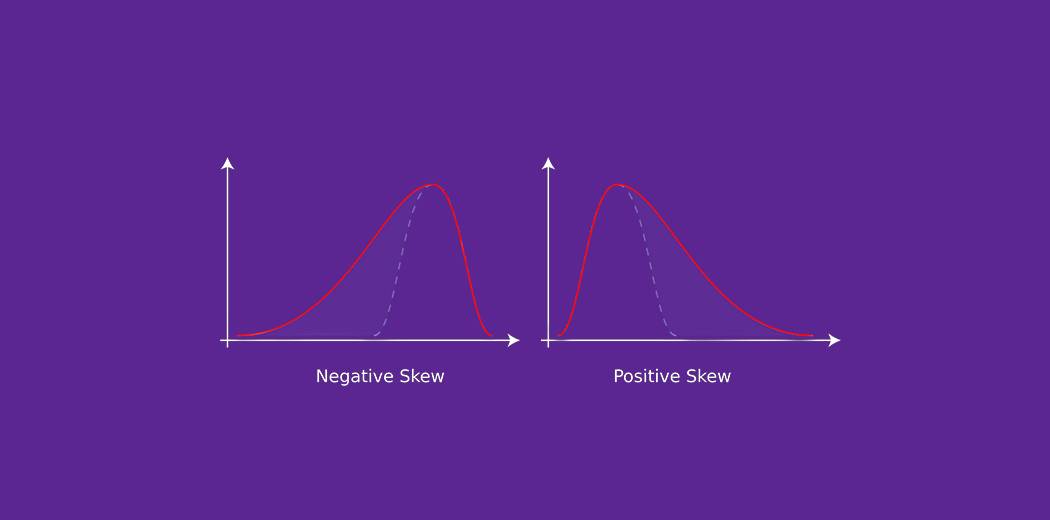
Also known as right-skewed data, positive skewness occurs when the tail on the right side of the distribution is longer or fatter. This suggests that the majority of data points are concentrated on the left side, with a few larger values pulling the mean in the positive direction.
Negative Skewness
Conversely, negative skewness, or left-skewed data, happens when the tail on the left side is longer or fatter. In this case, most data points cluster on the right side, with a few smaller values dragging the mean in the negative direction.
Calculating Skewness
Various coefficients are used to calculate skewness, providing insight into the distribution’s shape and asymmetry. Some commonly used coefficients include Pearson’s First and Second Coefficients of Skewness, as well as Bowley’s Coefficient of Skewness.
Real-life Examples of Skewness
In the world of finance, analyzing stock market returns often reveals positive skewness. This indicates that while most days see moderate gains or losses, occasional large gains result in the right-skewed distribution. Similarly, income distribution in many populations is left-skewed, with a few individuals earning exceptionally high incomes.
Skewness and Data Distribution
Skewness helps identify the departure from a normal distribution. In a normal distribution, the mean, median, and mode are all equal, and the curve is symmetric. Skewed data can indicate underlying issues in the data collection process or point to interesting phenomena within the studied population.
Importance of Skewness
Understanding skewness is essential for accurate data interpretation. Misinterpreting skewed data can lead to incorrect conclusions and decisions. Skewness also plays a pivotal role in fields like economics, epidemiology, and environmental science, where data distribution shapes policies and strategies.
Skewness in Data Analysis
In data analysis, recognizing skewness is the first step. Adjusting for skewness might involve data transformations, such as logarithmic or square root transformations, to make the distribution more symmetrical. This ensures that statistical tests and models are valid and reliable
Mitigating Skewness Effects
Skewness can adversely affect machine learning algorithms’ performance. Preprocessing steps like normalization and standardization can help mitigate its impact. However, understanding the data’s context is crucial to decide the most appropriate approach.
Addressing Skewed Data in Research
Researchers must acknowledge skewness and its implications in their studies. Proper statistical techniques can help deal with skewed data effectively, preventing biased outcomes and misguided interpretations.
Skewness and Outliers
Outliers can significantly influence skewness. Identifying whether the skewness is due to outliers or genuine distributional characteristics is essential for accurate analysis.
Common Misinterpretations
Misinterpreting skewness as an indication of normality can lead to erroneous conclusions. Skewness only provides insights into asymmetry, not the overall shape of the distribution.
Skewness vs. Kurtosis
While skewness addresses the data’s asymmetry, kurtosis deals with its tail behavior. High kurtosis indicates heavier tails, potentially implying more outliers.
Skewness in Machine Learning
In machine learning, understanding skewness helps select appropriate algorithms and preprocessing techniques. It ensures that models are trained on representative data and make accurate predictions.
Ethical Considerations in Skewed Data
In fields such as medical research, biased data due to skewed distributions can lead to medical inequalities and improper treatment recommendations. Ethical concerns arise when skewed data affects decision-making.
Conclusion
Skewness is a vital concept in statistics that helps us uncover hidden insights within data distributions. Its impact is far-reaching, influencing everything from investment strategies to scientific research. By embracing the nuances of skewness, we can make more informed decisions and contribute to the advancement of knowledge.
FAQs (Frequently Asked Questions)
Is skewness the same as asymmetry?
No, skewness specifically measures the degree and direction of asymmetry in a distribution.
Can skewness be negative and positive in the same dataset?
No, a distribution can only have either positive skewness or negative skewness.
Does normal distribution have skewness?
No, a perfectly normal distribution has zero skewness.